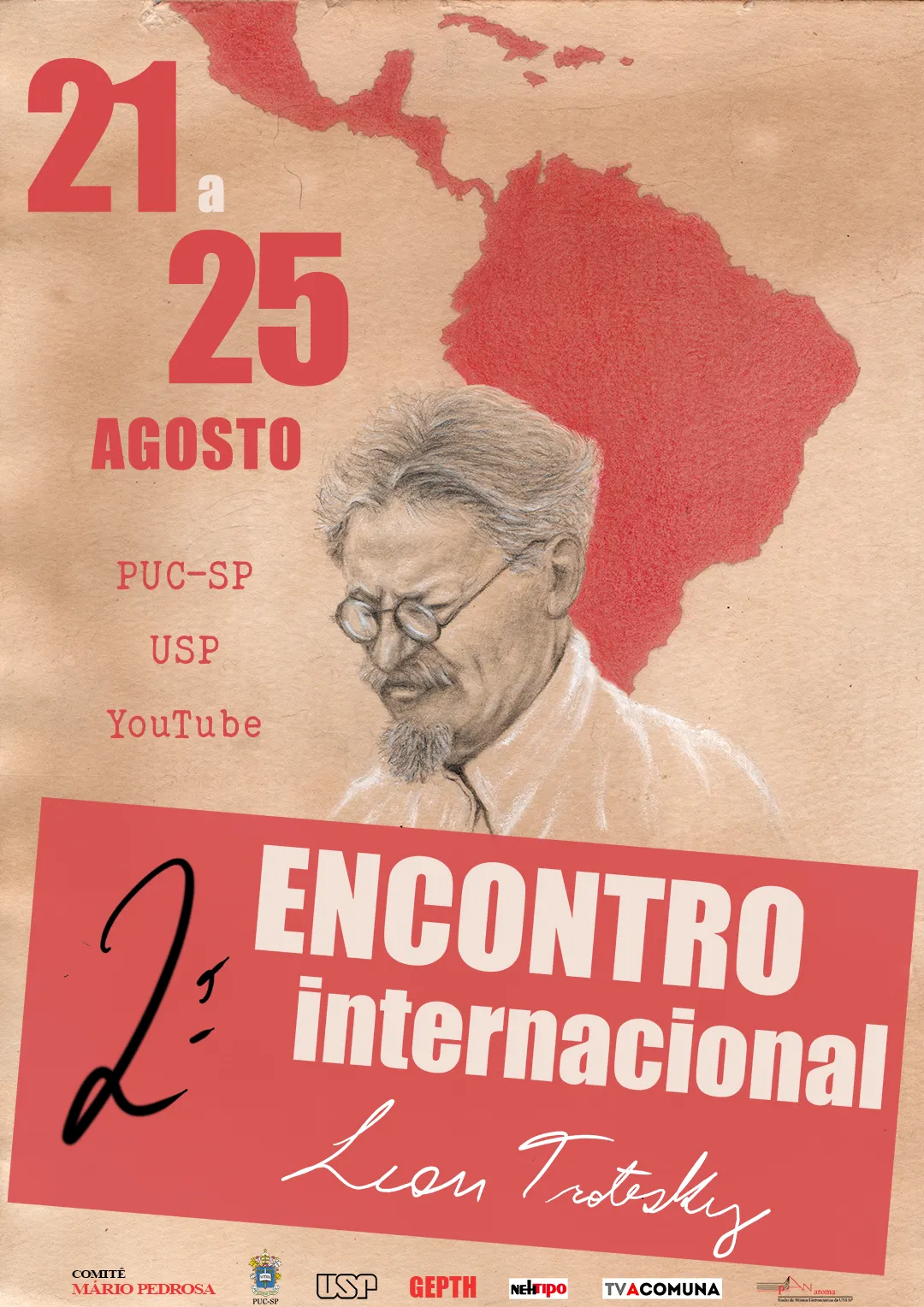
2nd International Leon Trotsky Meeting
PUC-SP (Campus Monte Alegre, Perdizes, Auditório 117A) e USP (FFLCH, Auditório Fernand Braudel) + Simpósios online (YouTube) · São Paulo · Brasil
EditionsThe edition
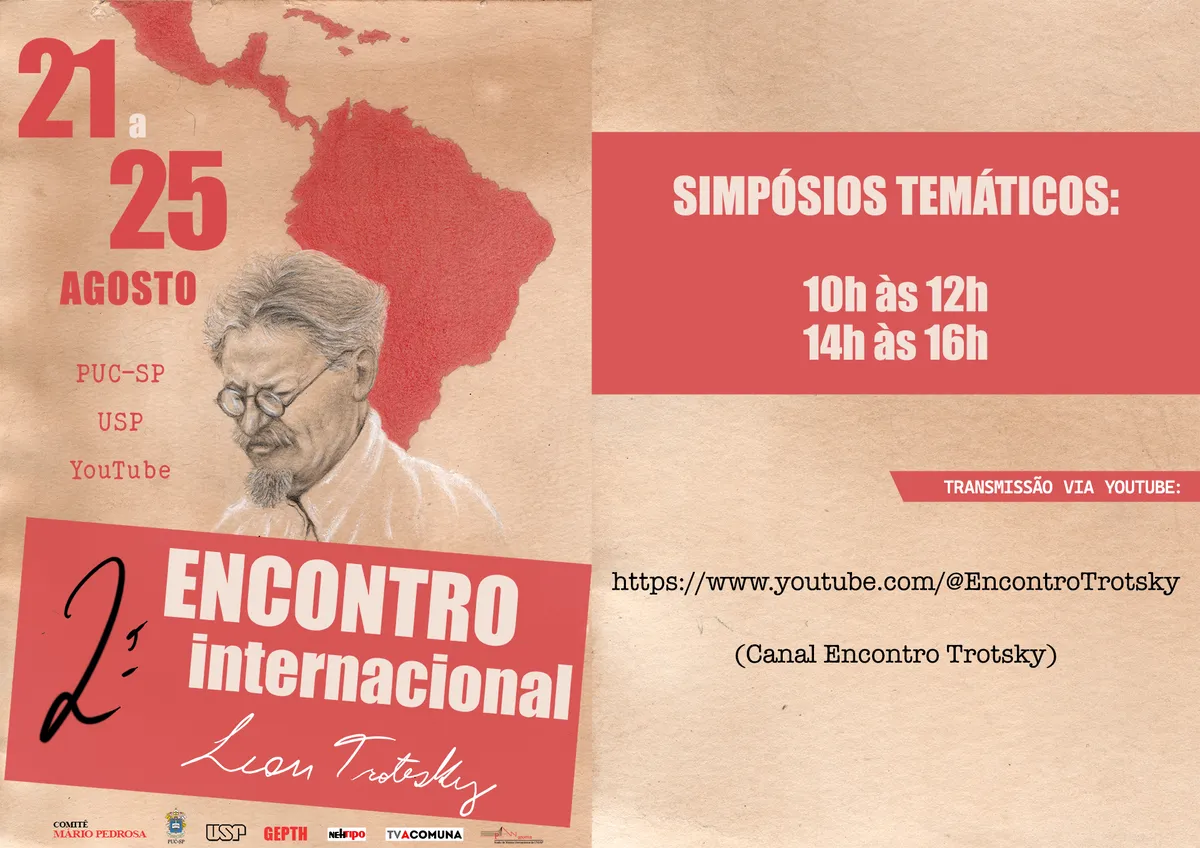
The 2nd International Leon Trotsky Meeting will take place from 21 to 25 August 2023. It is a politically plural event devoted to disseminating and debating the legacy of Trotsky and Trotskyism, organized by activists and intellectuals from different political groups as well as independents. The event will have a hybrid format: in the mornings and afternoons, online Thematic Symposia will be held, with room for questions and comments from the audience via YouTube; in the evenings, in-person Roundtables with guests will be held at PUC-SP, Monte Alegre Campus (Perdizes), and at USP – FFLCH (at USP only on the 22nd). All activities will be streamed live on the “Encontro Trotsky” YouTube channel, as well as on the TV PUC and TV AComuna channels.
Posters07
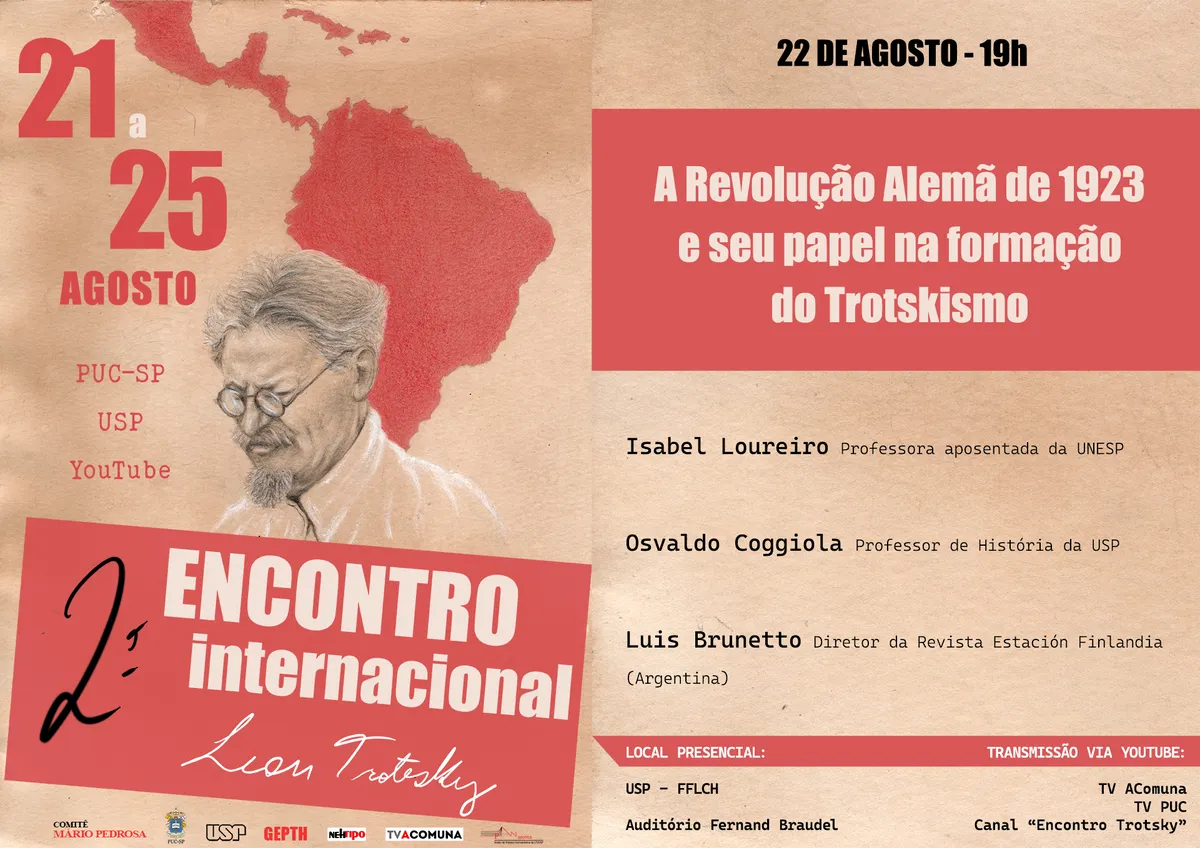
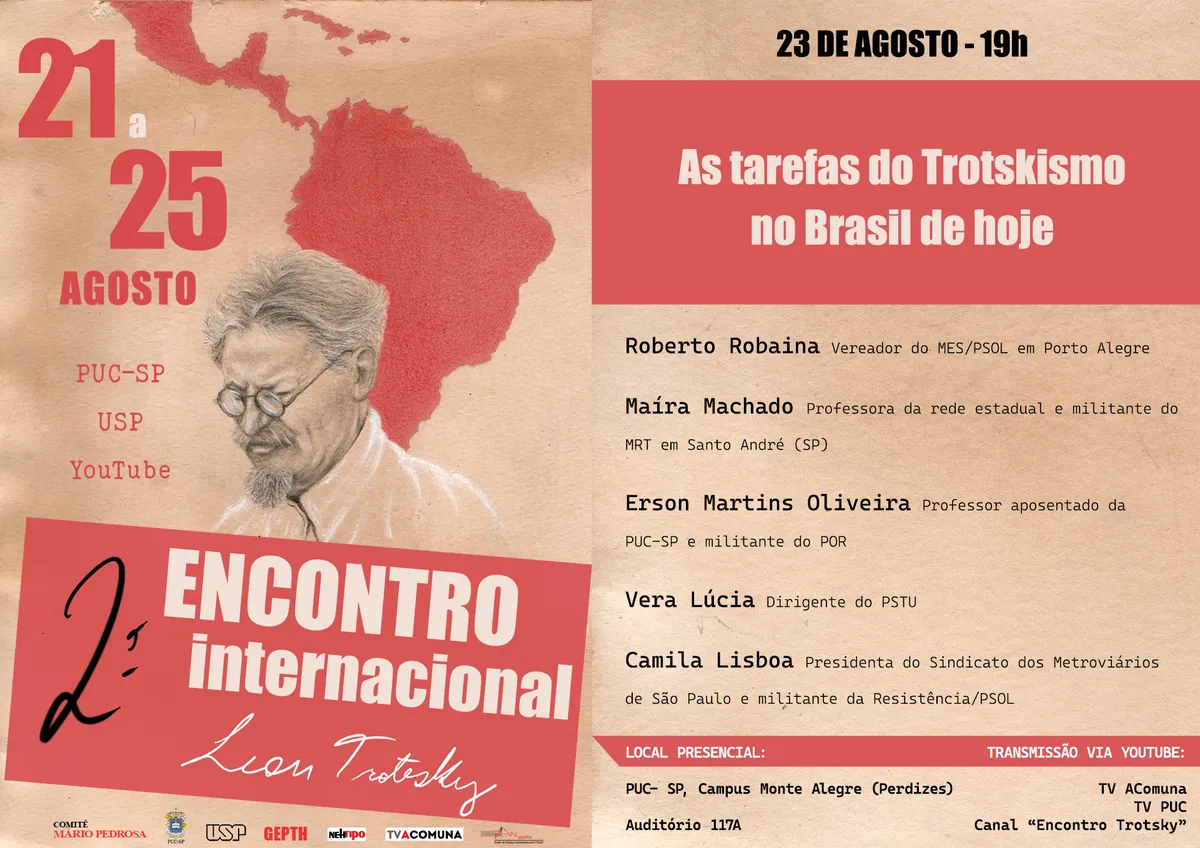
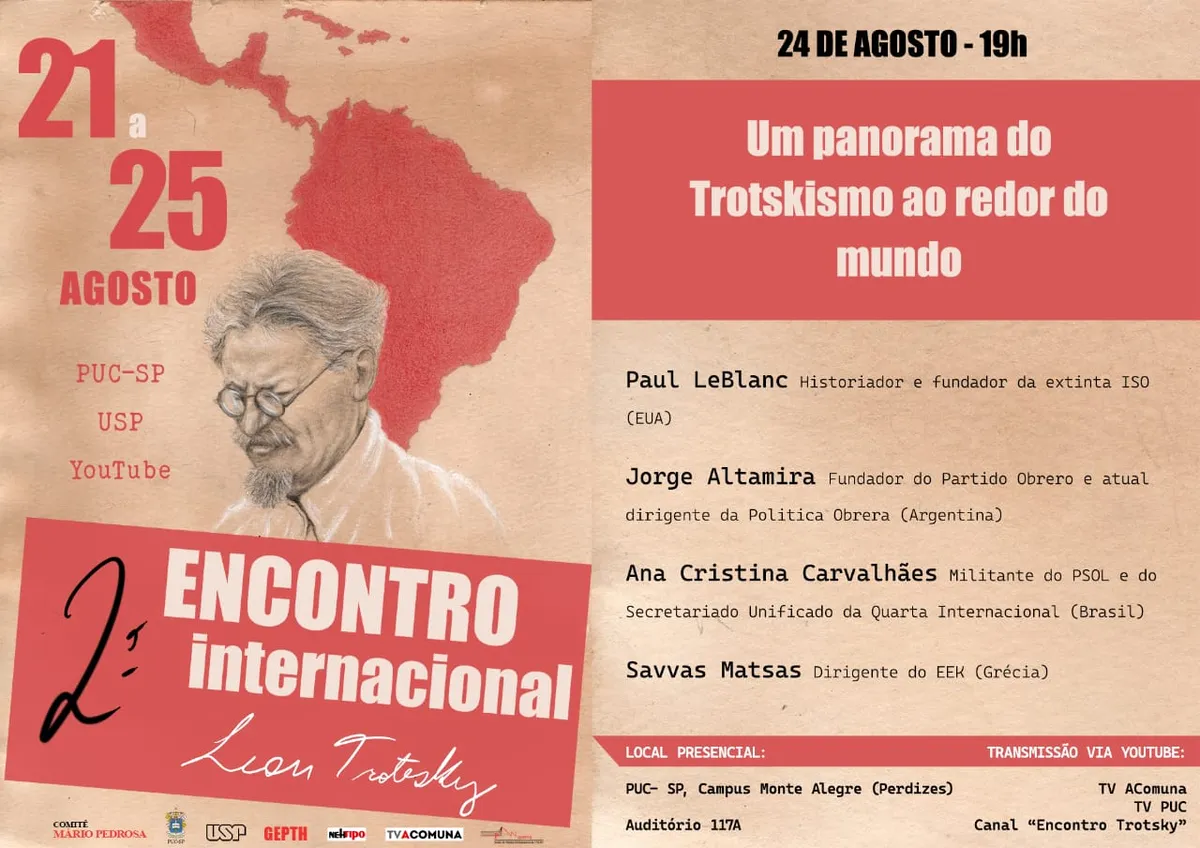
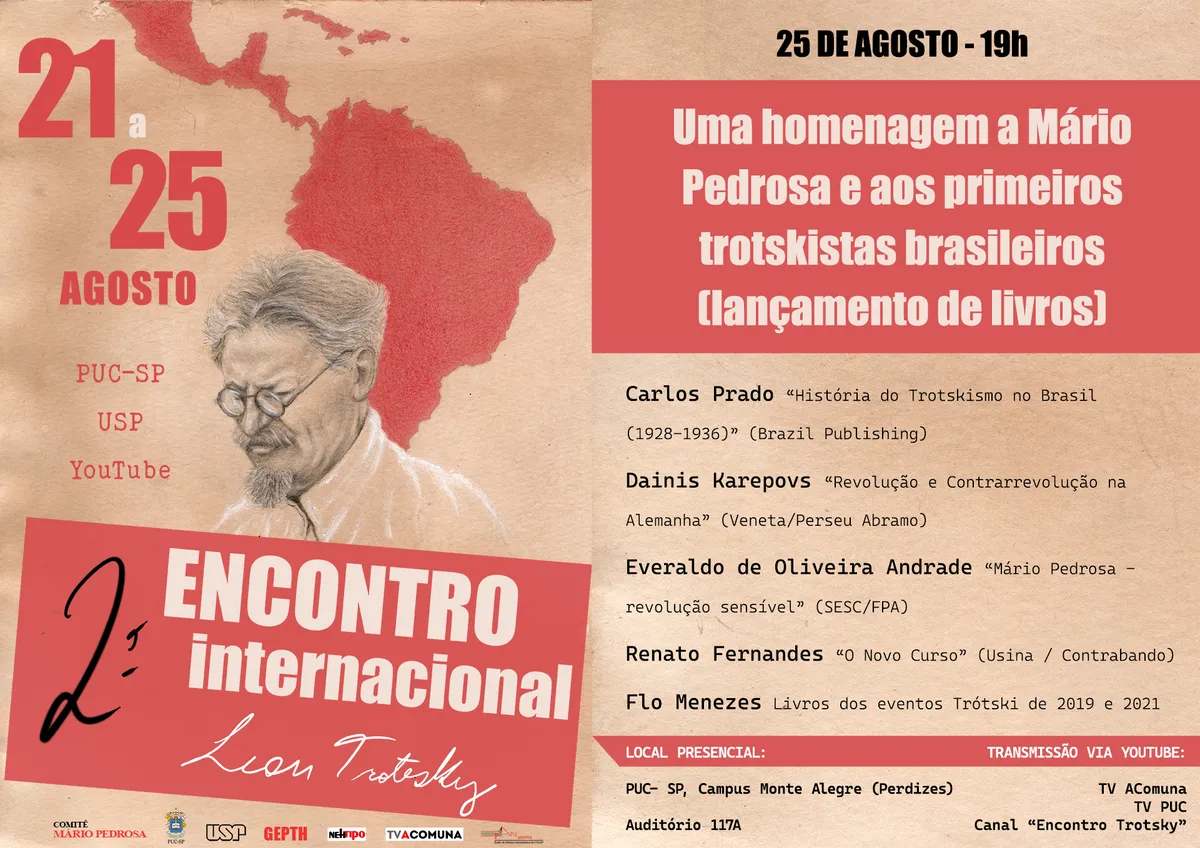
Programme
Day 1Monday, 21 August 2023
- Thematic symposium 1With videoPositions on the class struggle in Latin America
- Thematic symposium 2With videoPositions on the class struggle in Brazil
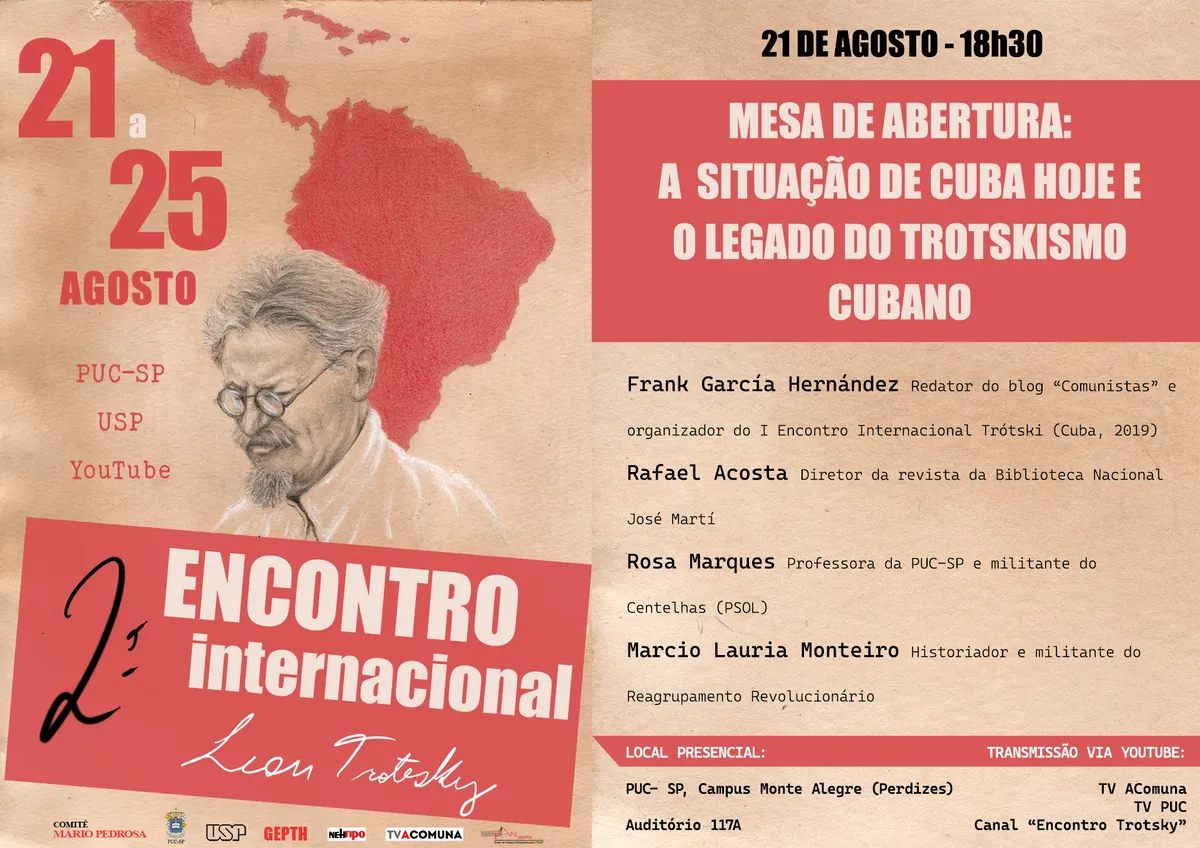
- OpeningOpening of the event
Day 2Tuesday, 22 August 2023
- Thematic symposium 3With videoPossible relations between Trotsky and other Marxists
- Thematic symposium 4With videoPositions on the war in Ukraine and imperialism today
Day 3Wednesday, 23 August 2023
- Thematic symposium 5With videoUneven and combined development and permanent revolution
- Thematic symposium 6With videoTrotsky and the arts
- Thematic symposium 7With videoReflections on the united front and trade unions
Day 4Thursday, 24 August 2023
- Thematic symposium 8With videoDebates on revolutionary strategy in Trotsky and today
- Thematic symposium 9With videoAspects of the history of the USSR
- Thematic symposium 10With videoHistory of Trotskyism in Brazil
Day 5Friday, 25 August 2023
- Thematic symposium 11History of the Fourth International and the question of revolutionary leadership
- Thematic symposium 12History of Latin American Trotskyism
- Thematic symposium 13The USSR, Stalinism and the theory of the bureaucratized workers' state
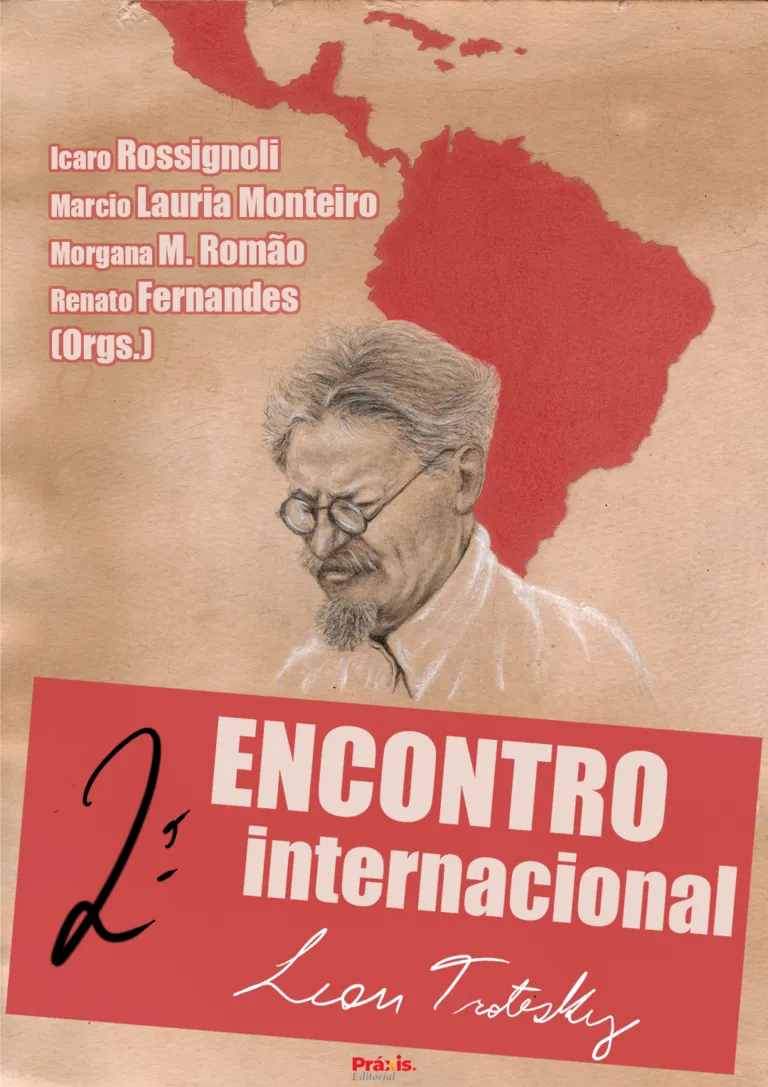
Livro do II Encontro Internacional Leon Trótski
Marcio Lauria Monteiro, Morgana M. Romão, Icaro Rossignoli e Renato Fernandes
36 artigos baseados em parte dos quase 60 trabalhos apresentados; publicado em julho de 2024.
Book preface — Icaro Rossignoli, Marcio Lauria Monteiro, Morgana M. Romão e Renato Fernandes
PREFACE
By Icaro Rossignoli, Marcio Lauria Monteiro, Morgana M. Romão and Renato Fernandes – June 2024 [1]
In the year that marked eighty years since the death of Leon Trotsky and eighty-two since the founding of the Fourth International, a pandemic with dramatic consequences around the world made it impossible to hold what was to be the 2nd International Leon Trotsky Meeting, originally scheduled to take place in São Paulo in August 2020.
The first edition of the event, held in Cuba in May 2019 on the initiative of Frank Hernandez García, achieved a historic feat by bringing together activists, formal and informal workers, trade unionists and students, whether or not they were Trotskyists, in a country where important gains of the only victorious anti-capitalist social revolution in Latin America still survive, but where a bureaucracy equivalent to the one Trotsky devoted so much energy to fighting, for the sake of socialism and international revolution, still holds power. Regardless of any assessment of Cuba – whether it is socialist, state capitalist or a degenerated workers' state – the importance of this feat in the history of international Trotskyism is inestimable, and worthy of being continued.
During the event in Cuba, the “Mário Pedrosa” Organizing Committee was formed with the task of organizing the 2nd Meeting; it was made up of the Brazilians attending the event and named in honor of one of the pioneers of Trotskyism in Brazil. When the event was suspended because of the pandemic, the Committee organized two online events, in August 2020 and 2021, under the title Trotsky in Permanence, both international in scope. While the 2020 event was more modest, the 2021 event featured guest Roundtables and dozens of papers presented in Thematic Symposia, culminating in the publication of a book of the same name with its contributions. Over this period the Committee's composition changed, with members leaving and joining, but it always remained politically diverse, with activists from different organizations as well as independent intellectuals.
Today we are five years on from our first meeting, celebrating with this book the holding of the 2nd International Leon Trotsky Meeting, which took place in person in São Paulo (at PUC-SP and USP) and online (via YouTube and Facebook) from 21 to 26 August 2023. The joining of forces located in such diverse and distant places made this international event possible in a hybrid format, overcoming the difficulties of scarce resources through the great effort and solidarity that the “Mário Pedrosa” Organizing Committee invested in this collective project.
The event featured 5 in-person Roundtables, with a total of 21 talks, and 13 online Thematic Symposia, with a total of 57 talks, over 5 days. The Roundtables were made up of invited activists and intellectuals and addressed the themes “The situation in Cuba today and the legacy of Cuban Trotskyism” (Opening), “The German Revolution of 1923 and its role in the formation of Trotskyism”, “The tasks of Trotskyism in Brazil today”, “An overview of Trotskyism around the world”, “A tribute to Mário Pedrosa and the first Brazilian Trotskyists” and, as the closing session, a presentation of recently published books. The various Thematic Symposia, in turn, were made up of papers submitted by people from several countries and organizations.
All this resulted in many hours of live broadcasts ([available on the event's YouTube channel](//www.youtube.com/playlist?list=PLeSj43ndMtRS75Qbib8234C6OjrO4FFBz)) and in the 36 texts in this book, in which all participants in the meeting were invited to publish. [2] Dozens of political organizations were present, arranged without personal preference on the part of any of us, and the most pressing issues of the class struggle in Brazil and worldwide were discussed, as well as various aspects of the history and legacy of Trotskyism and of the Soviet Union. These discussions raised a number of questions about the activity of left-wing organizations around the world and helped reveal the current meaning of the theoretical and practical controversies that have always marked the turbulent history of Trotskyism.
In a world that is the stage of climate catastrophes, of the ever more meteoric rise of the far right and of an unprecedented growth of poverty and oppression, the (re)construction of a revolutionary alternative by the working class is a task of the first order, and Trotsky's legacy provides us with valuable theoretical and programmatic tools for building that alternative. If capitalism is not destroyed in favor of a truly socialized democracy, humanity will agonize until it finally perishes. The watchword “socialism or barbarism” has never been more relevant.
Along this path, getting to know organizations, comparing political programs, discussing forms of action and analyzing the history of the international communist movement, with special attention to its mistakes, successes and contradictions, are indispensable steps. We believe that the 2nd Leon Trotsky Meeting was able to contribute in all these respects.
Having concluded our activities after five years of many meetings, three events and two books, the “Mário Pedrosa” Organizing Committee considers that it has accomplished not only what it originally set out to do in Cuba in 2019, but much more. And it is with great joy that we welcome the organization of a 3rd International Meeting for October 2024, in Buenos Aires, Argentina. May many more follow!
Long live Leon Trotsky!
Long live revolutionary socialism!
N.B.: Throughout this book Trotsky's name is spelled in different ways (Trótski, Trotsky, Trotski, etc.). We chose to preserve the spelling chosen by each author rather than impose standardization, since the multiple spellings do not hinder understanding and there is, in fact, no recognized and well-established standard, even though there are transliteration rules (which, incidentally, if followed, lead to a spelling quite unusual for Brazilian readers).
NOTES
[1] Members of the “Mário Pedrosa” Organizing Committee, who edited this book on behalf of the Committee. Icaro Rossignoli holds a master's degree in Social History from PPGH UFF and teaches History in the municipal school systems of Maricá (RJ) and Rio de Janeiro (RJ). Marcio Lauria Monteiro holds a PhD in Social History from PPGH UFF and is a professor and researcher at IFBA in Porto Seguro. Morgana M. Romão is a master's student in Social History at PPGH UFF. All three are members of the Study and Research Group on Trotsky / Trotskyism and Historiography (GEPTH), one of the institutions supporting the 2nd Meeting. Renato Fernandes holds a PhD in Political Science from Unicamp, teaches Political and Economic Sciences at FATEC Sumaré (SP) and is a member of the Unicamp Laboratory of Political Thought. Besides being researchers and part of the event's organization, all of them are Trotskyist activists.
[2] Since not all participants submitted the texts of their presentations, we grouped the texts received without necessarily following the composition of the Roundtables and Thematic Symposia when arranging the sections of this book.